Home > Resource Center > Portable Pickleball Nets Guide
Portable Pickleball Nets Showdown
Stationary vs. Wheeled: Finding the Perfect Net for Your Space
When choosing portable pickleball nets, the decision rests on the balance between durability and mobility. Stationary nets offer a heavy-duty steel frame ideal for semi-permanent outdoor use, while wheeled nets provide unmatched portability for multi-use facilities. Both styles must adhere to USA Pickleball (USAP) standards, featuring a 22-foot width and 34-inch center height.
As the sport of pickleball continues its rapid expansion, facility managers and homeowners are increasingly turning to portable pickleball nets to maximize court availability. Whether you are converting a tennis court or a parking lot, selecting the right frame style is essential for player satisfaction and equipment longevity.

Figure 1: High-end wheeled portable nets allow for rapid court transitions in multi-sport facilities.
Stationary Portable Pickleball Nets
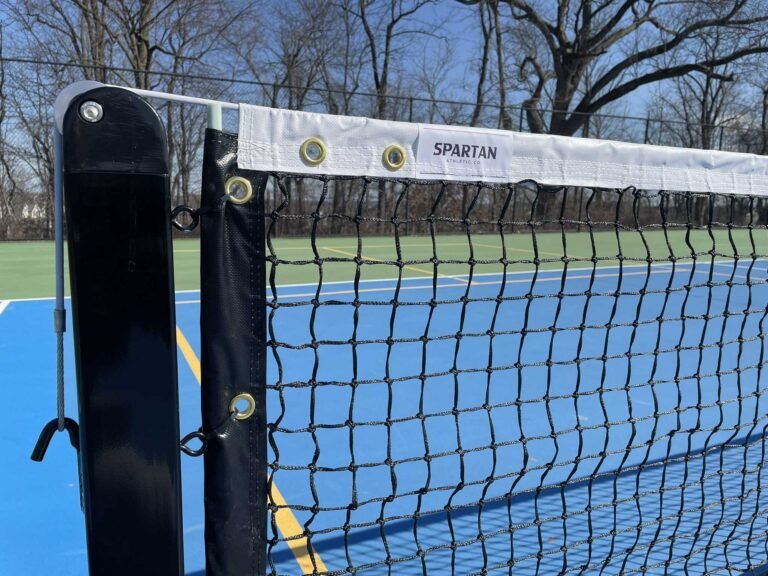
Stationary models are the most traditional form of portable pickleball nets. Typically constructed from powder-coated steel or reinforced aluminum, these units are designed for stability. Because they lack a wheel assembly, they sit flush to the ground, mimicking the feel of a permanent net system.
- Durability: These nets are built to withstand heavy play and varied weather conditions, making them suitable for asphalt, concrete, or even grass surfaces.
- Stability: Without the height of a wheel carriage, stationary nets are less prone to tipping in high winds.
- Portability Challenge: While “portable,” these units are heavy. They are best suited for situations where the net stays in one location for the entire season.
Wheeled Portable Pickleball Nets
Wheeled portable pickleball nets have revolutionized multi-use spaces. Featuring lightweight frames and non-marring locking casters, these nets can be moved by a single person in seconds. This makes them the primary choice for schools, community centers, and indoor sports complexes.
- Mobility: Large, heavy-duty wheels allow the net to glide over court surfaces without causing damage.
- Ease of Storage: Facilities that host basketball or volleyball can quickly clear the floor by rolling the pickleball nets into storage closets.
- Maintenance Tip: Ensure your wheeled net features a locking mechanism. Without locks, the net can shift during high-impact play, disrupting the game.
Selecting the Best Net Material
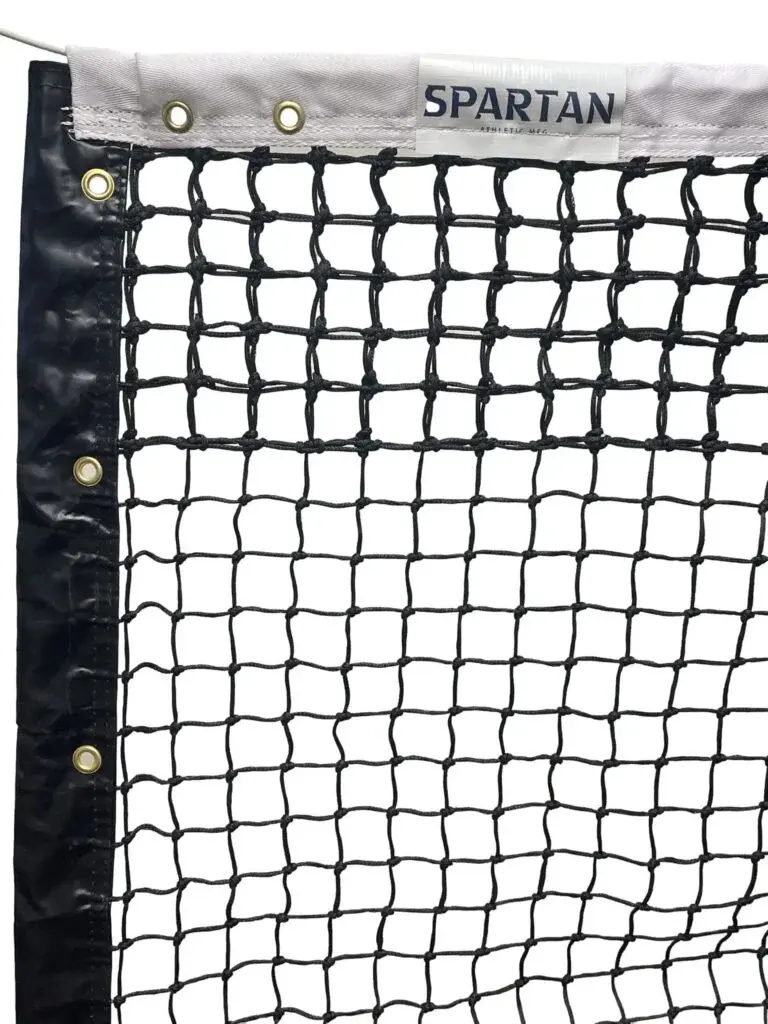
Beyond the frame, the mesh material dictates the net’s lifespan. Most portable pickleball nets utilize one of three materials:
- Nylon: The premium choice. Nylon offers superior UV resistance and durability but comes at a higher price point.
- Polyester: The “industry standard.” It provides an excellent balance of weather resistance and affordability.
- Polypropylene: The budget-friendly option. While functional, it is more susceptible to UV degradation and is recommended primarily for indoor use.
For more information on why a steel portable pickleball net outperforms aluminum nets, visit our article Why Steel Portable Pickleball Nets are a Winning Investment.
Find Your Portable Net
From tournament-grade wheeled systems to durable home stationary nets, we have you covered.
Shop Portable Pickleball Nets