Asphalt Tennis Court Maintenance
Estimated reading time: 4 minutes
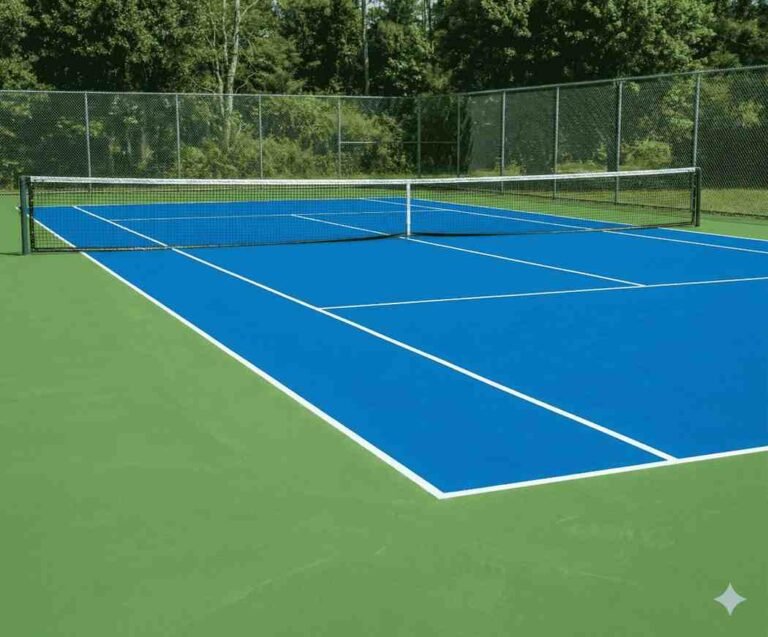
Approximately 70% of tennis courts in the United States are classified as “hard” courts. Specifically, these are constructed from either asphalt or concrete. Asphalt tennis courts are the industry standard because they offer uniform play characteristics and require significantly lower maintenance than “soft” (clay) courts. However, asphalt is a petroleum-based product that remains in a constant state of transition. Therefore, understanding its technical properties is vital for long-term preservation.
The Role of UV Oxidation and Brittleness
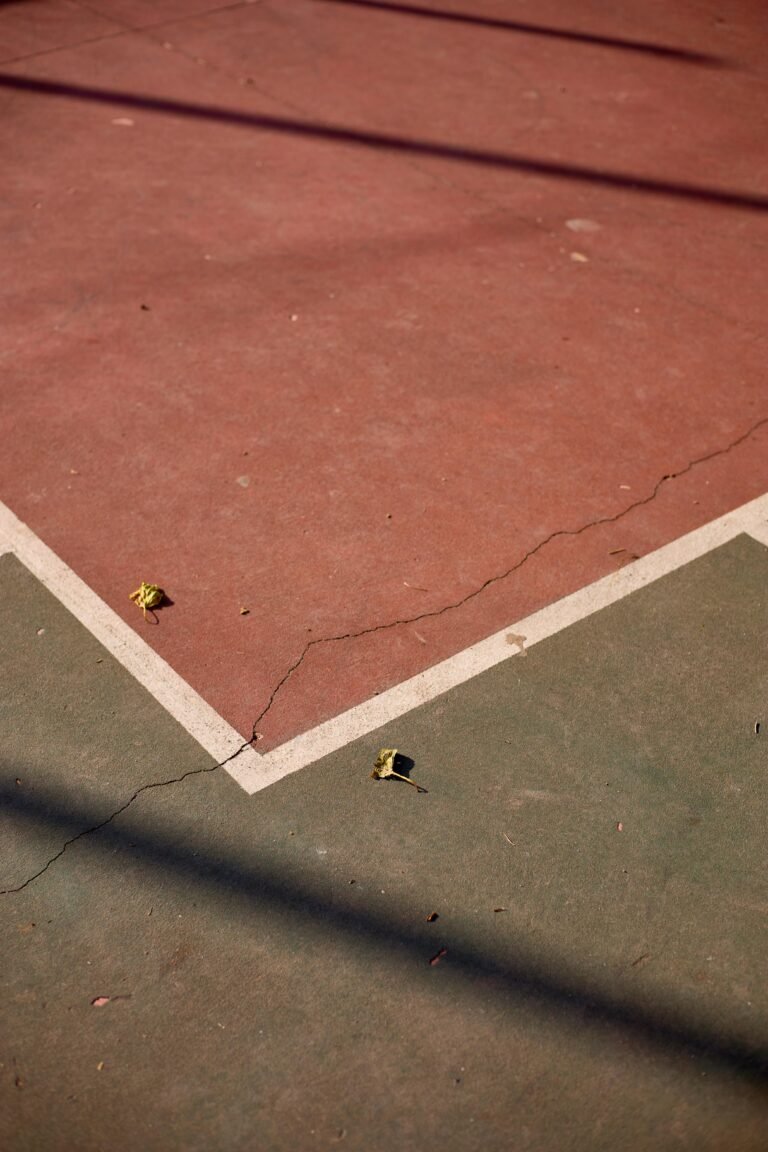
Asphalt tennis courts are ideal for owners seeking a low-maintenance solution. Unlike clay, they require no watering or grooming. Nevertheless, as asphalt is exposed to the elements, the liquid binder begins to oxidize. Consequently, the surface becomes brittle and loses its natural flexibility. This process leads to the formation of hairline fatigue cracks.
Ignoring these cracks is a critical mistake. Specifically, water and vegetation infiltrate the openings, leading to base erosion. Therefore, you must fill cracks promptly to prevent structural failure. While no product provides a “permanent” 100-year fix, using professional-grade tennis court crack repair fillers will significantly prolong the surface’s lifespan. Typically, a well-maintained asphalt court lasts 12–15 years before requiring a major asphalt overlay.
Environmental Maintenance and Cleaning
Hard courts can be played on year-round, provided they are free of snow and ice. In humid climates, courts may experience algae or mildew growth. Specifically, these can be treated with a mild herbicide or a diluted bleach and water solution. Additionally, a pressure wash every two years is recommended to remove deep-seated dirt and maintain the high-traction properties of the acrylic coating.
Structural Integrity and Construction Best Practices
The longevity of an asphalt tennis court depends heavily on the sub-base construction. If the base work is inadequate, settlement and movement will occur. Consequently, this leads to structural cracks that mirror the movement of the earth beneath the asphalt.
Furthermore, structural engineering at the net posts is essential. Specifically, we recommend using round net post footers rather than square ones. Square corners create localized stress points that often lead to “star” cracking. Ideally, net post sleeves should be set in concrete before the asphalt is paved. By paving over the concrete, you create one continuous asphalt surface, which reduces the number of joints where cracks usually start.
Selecting the Right Repair Solution
When cracks do appear, selecting the right material is essential for a successful bond:
- For Structural Expansion Joints: Use an elastomeric solution like Tennis Court Crack Flex to accommodate slab movement.
- For Longitudinal Cracking: Utilize a high-solids 5-Gallon Pail of silica-fortified filler for bulk efficiency.
- For Spot Repairs: Use the 1-Gallon Crack Repair for precision DIY touch-ups.
Critical Technical Reminder
IMPORTANT: All acrylic repair products must be applied in temperatures 50°F and rising. Specifically, you must ensure the court is protected from freezing temperatures for at least 96 hours after application. This window is mandatory to ensure a full chemical cure and long-term adhesion.
Typically, an asphalt tennis court has a structural lifespan of 12–15 years. However, this depends heavily on routine maintenance. Specifically, filling cracks immediately and resurfacing every 5–7 years to prevent UV oxidation can extend the court’s playability.
Asphalt is a petroleum-based product that becomes brittle as it ages and loses its liquid binder. Consequently, environmental stress and temperature shifts cause the surface to shrink and crack. Furthermore, poor sub-base construction or drainage issues can lead to structural “settlement” cracks.
Yes. For standard cracks, you can use a silica-fortified, high-solids acrylic filler. Specifically, you must clean the crack of all debris and pack the material firmly with a flexible handheld scraper. However, for active expansion joints, you should use an elastomeric filler like Crack Flex to accommodate slab movement.
Specifically, you should only apply acrylic repair products when ambient and surface temperatures are 50°F and rising. Additionally, it is vital to protect the repair from freezing temperatures for at least 96 hours to ensure a full chemical cure.